

Pertussis (whooping cough) cases are increasing in North Carolina.
According to the CDC, there were 105 reported cases in North Carolina in 2023 and 757 cases in 2024. Nationally, there were 7,063 cases reported in 2023 and 35,435 cases in 2024.
Reportedly, in the first quarter of 2025 alone, there has been at least 106 cases of pertussis reported in North Carolina.
Even closer to home, there have been reported cases of Pertussis in several of the surrounding counties of our service areas.
Please continue to be safe, and if you feel that you have symptoms mentioned below or exposure, please seek medical attention.
What is Pertussis (whooping cough):
- Pertussis (whooping cough) is a highly infectious disease of the respiratory tract caused by the bacteria Bordetella pertussis.
- Pertussis can be more severe and even fatal in babies and young children making them among the most vulnerable.
- According to the CDC, about 1 in 3 babies younger than 1 year old who get Pertussis will require care in a hospital setting.
- Older children and adults may also experience complications from Pertussis, such as pneumonia.
- Pertussis can be diagnosed clinically (by symptoms) or laboratory specimens
- Pertussis is treated with antibiotics and supportive care.
How is Pertussis Spread:
- Droplet transmission (mostly)
- Fomite transmission (an object that can be contaminated after coming in contact with bodily secretions (saliva, nasal secretions)
Incubation Period (time between exposure to an infection and the appearance of symptoms):
- Approximately 7-10 days
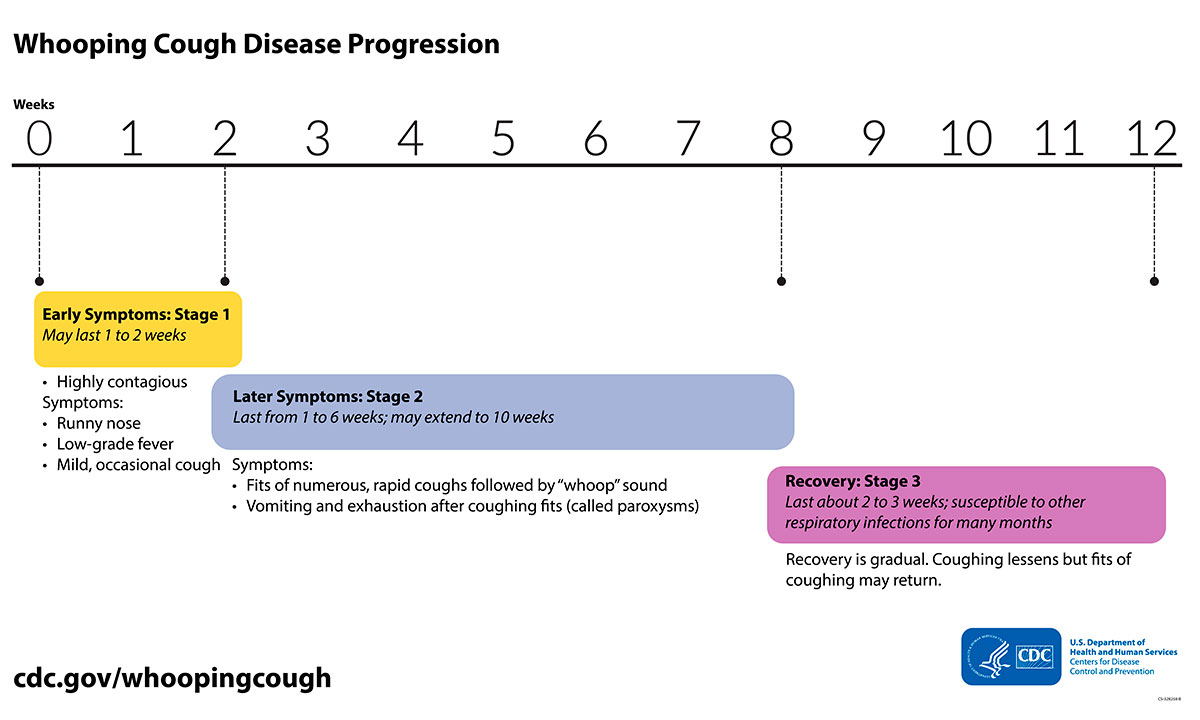
Pertussis Symptoms and Disease Progression:
Pertussis Vaccination:
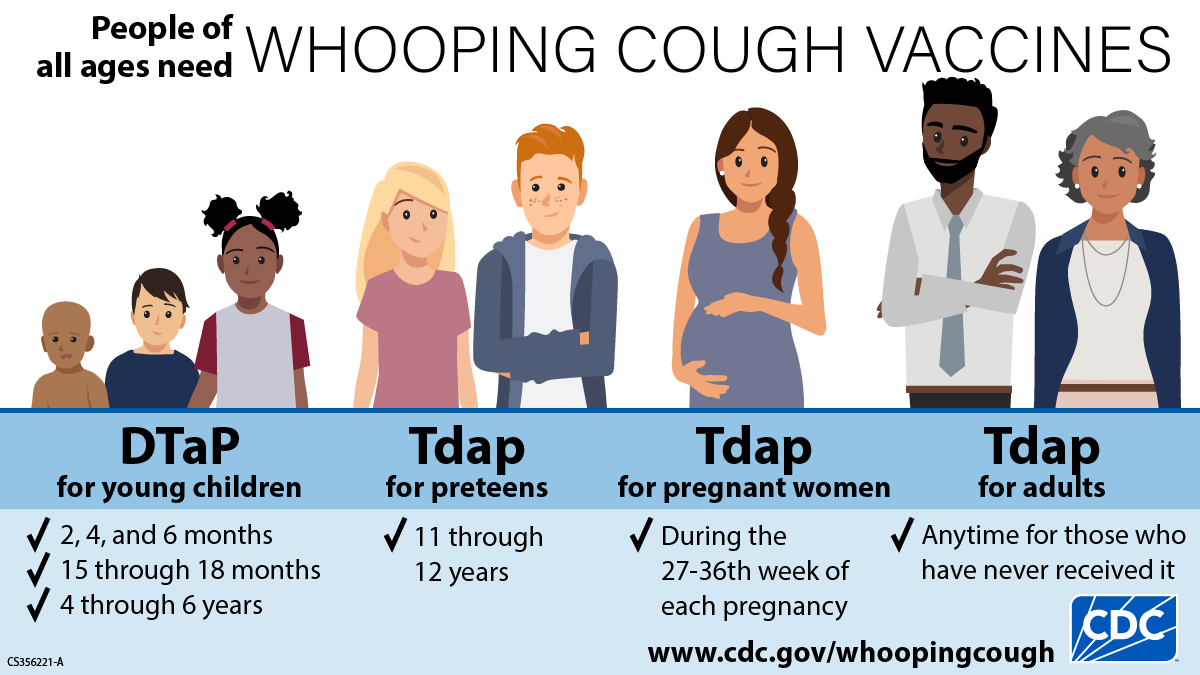
- DTaP and Tdap vaccinations help to protect against Pertussis (whooping cough), but the protection against Pertussis from the vaccination does decrease over time.
- For all adults, Tdap is recommended every 10 years and during every pregnancy.
- Tdap vaccination includes prevention against Tetanus, Diphtheria, and Pertussis
Pertussis Prevention:
- Vaccination
- Good hand hygiene
- Good respiratory hygiene
- Postexposure prophylaxis (for certain groups)
Frequently Asked Questions
What is pertussis?
Pertussis, also known as whooping cough, is a highly infectious disease of the respiratory tract caused by the bacteria Bordetella pertussis. It can be diagnosed clinically by symptoms or through laboratory specimens and is treated with antibiotics and supportive care.
Who is most at risk from pertussis?
Babies and young children are among the most vulnerable, as pertussis can be more severe and even fatal in this age group. According to the CDC, about 1 in 3 babies younger than 1 year old who get pertussis will require care in a hospital setting. Older children and adults may also experience complications such as pneumonia.
How does pertussis spread?
Pertussis spreads primarily through droplet transmission. It can also spread through fomite transmission, meaning contact with an object that has been contaminated by bodily secretions such as saliva or nasal secretions.
How long does it take for pertussis symptoms to appear after exposure?
The incubation period for pertussis is approximately 7 to 10 days after exposure.
How can pertussis be prevented?
Pertussis can be prevented through vaccination, good hand hygiene, good respiratory hygiene, and postexposure prophylaxis for certain groups. The DTaP and Tdap vaccinations help protect against pertussis, though the protection does decrease over time. For all adults, Tdap is recommended every 10 years and during every pregnancy.
How many pertussis cases have been reported in North Carolina?
There were 105 reported cases in North Carolina in 2023 and 757 cases in 2024. In the first quarter of 2025 alone, at least 106 cases of pertussis were reported in North Carolina. Nationally, there were 7,063 cases reported in 2023 and 35,435 cases in 2024.