

- Strokes are a leading cause of death and disability
- Knowing the signs of a stroke can reduce the severity of damage to the brain
- The acronym BE FAST is an effective way to remember the signs of a stroke
A stroke blocks the passage of blood and oxygen to the brain, causing rapid brain cell death and severe brain damage. Early action is important when you or someone you know might be having a stroke. The chances of survival are vastly improved when emergency treatment begins quickly. Stroke is the fourth leading cause of death and a leading cause of disability in the United States, yet many people don’t know how to recognize when one occurs. Understanding what happens during a stroke and how to spot the symptoms is the best way to avoid permanent brain damage or death from a stroke.
What Happens During a Stroke?
A stroke is a medical event or injury that disrupts blood flow to the brain. Strokes are most commonly caused by blood clots that block blood flow to part of the brain. In some cases, strokes are caused when an artery in the brain ruptures. The interruption of blood flow impacts the region of the body that the part of the brain controls, affecting how that part of the body works. Effects on the body include paralysis, sensory changes, speech problems, and difficulty thinking.
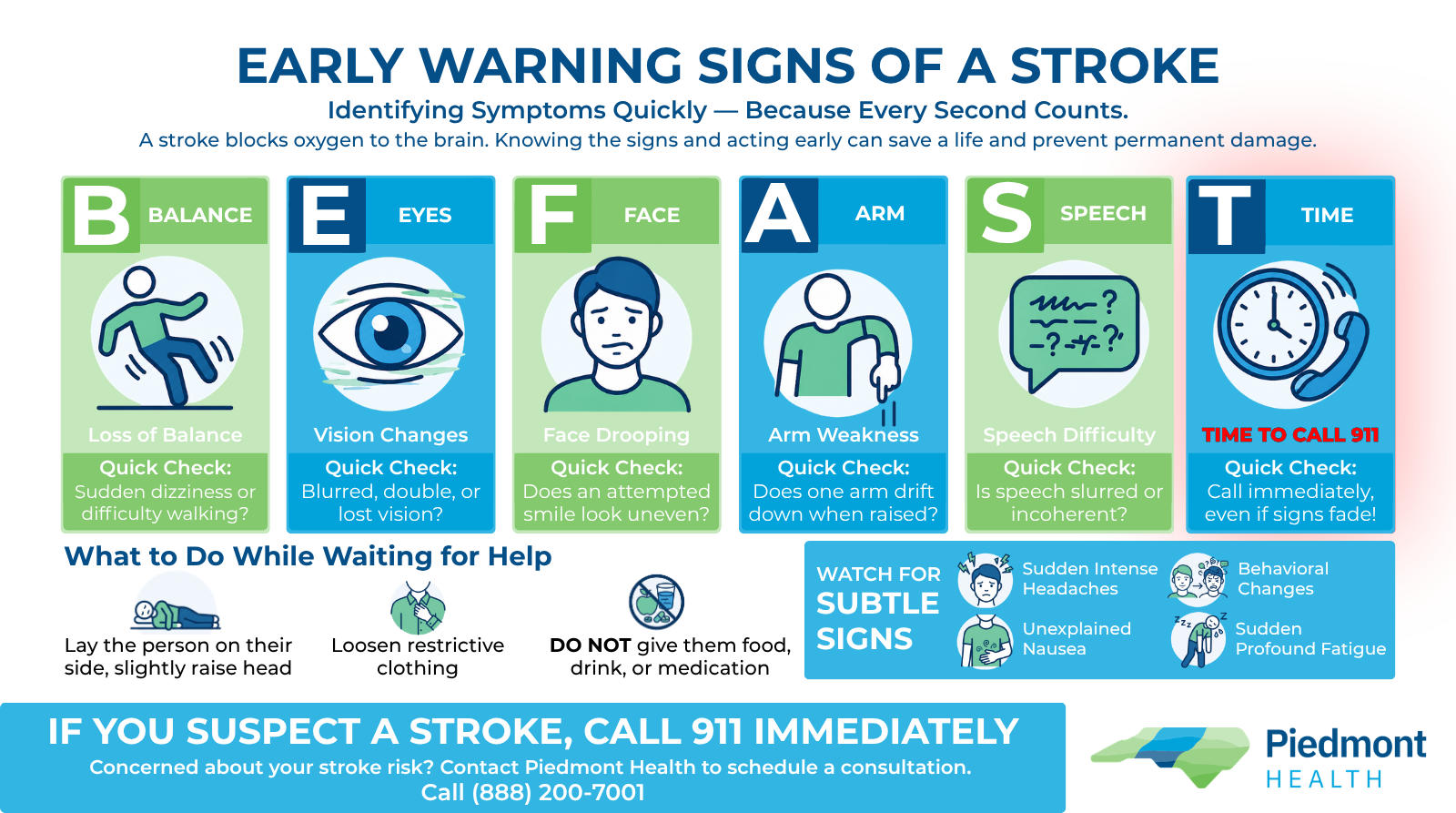
The B.E. F.A.S.T. Acronym: How to Spot a Stroke
The acronym BE FAST is an effective way to remember the signs of a stroke and what to do if someone near you is experiencing them. The BE FAST acronym describes the different symptoms an individual may experience when a stroke occurs.
- B – Balance: A sudden loss in balance or coordination that may cause difficulty walking or dizziness is common.
- E – Eyes: Vision changes, including blurred vision, double vision, or loss of sight in one or both eyes, may occur.
- F – Face Drooping: One side of the face droops or feels numb. Ask the person to smile. Is the smile uneven?
- A – Arm Weakness: One arm may feel weak or numb. Ask the person to raise both arms. Does one arm drift downward?
- S – Speech Difficulty: Slurred or incoherent speech or difficulty speaking may occur. Ask the person to repeat a simple sentence.
- T – Time to call 911: If a person shows any of these symptoms (even if the signs go away), call 911 immediately.
Subtle Stroke Symptoms You Might Ignore
Some stroke signs may be difficult to spot, especially if symptoms subside after a few minutes. In some cases, unique symptoms might fall outside of the typical symptoms described by the BE FAST acronym. Subtle stroke symptoms that are more likely to be overlooked include:
- Sudden, intense headache
- Behavioral changes, including memory loss and agitation
- Unexplained nausea or vomiting
- Sudden generalized profound weakness or fatigue
- Sudden unexplained pain in the face or body
Emergency Response: What to Do While Waiting for Help
As soon as someone experiences stroke symptoms, call 911 for emergency assistance. While waiting for an ambulance, lay the individual down on their side with their head slightly raised and supported, and loosen any restrictive clothing. Do not give an individual with stroke symptoms anything to eat or drink, or any type of medication.
Any time you or someone you know experiences sudden, unexplained symptoms, including cognitive difficulties, lack of function, or intense pain or illness, it’s crucial to see a physician. If you have questions about symptoms that may signal a stroke or concerns about your stroke risk, the professionals at Piedmont Health can assess your symptoms. Contact us today by completing our simple online form or calling (888) 200-7001 to schedule a consultation.
Frequently Asked Questions
What is a stroke?
A stroke is a medical event that disrupts blood flow to the brain. It is most commonly caused by a blood clot blocking blood flow to part of the brain, or in some cases by an artery in the brain rupturing. The interruption of blood flow affects the region of the body that the impacted part of the brain controls, causing effects such as paralysis, sensory changes, speech problems, and difficulty thinking.
What does BE FAST stand for in stroke recognition?
BE FAST is an acronym used to remember the warning signs of a stroke:
B – Balance: A sudden loss of balance or coordination
E – Eyes: Vision changes such as blurred or double vision
F – Face Drooping: One side of the face droops or feels numb
A – Arm Weakness: One arm feels weak or numb
S – Speech Difficulty: Slurred or incoherent speech
T – Time to call 911: If any of these symptoms appear, call 911 immediately
What are the subtle stroke symptoms that are easy to miss?
Some stroke symptoms fall outside the typical BE FAST signs and are more likely to be overlooked. These include a sudden intense headache, behavioral changes such as memory loss or agitation, unexplained nausea or vomiting, sudden generalized weakness or fatigue, and sudden unexplained pain in the face or body.
What should you do while waiting for emergency help after a stroke?
Call 911 immediately. While waiting for an ambulance, lay the individual down on their side with their head slightly raised and supported, and loosen any restrictive clothing. Do not give the person anything to eat or drink, or any type of medication.
Why is it important to act quickly when a stroke occurs?
Strokes cause rapid brain cell death and severe brain damage by blocking the passage of blood and oxygen to the brain. The chances of survival are vastly improved when emergency treatment begins quickly. Stroke is the fourth leading cause of death and a leading cause of disability in the United States.
Featured Image: Lordn / Shutterstock