
Key Takeaways / Summary:
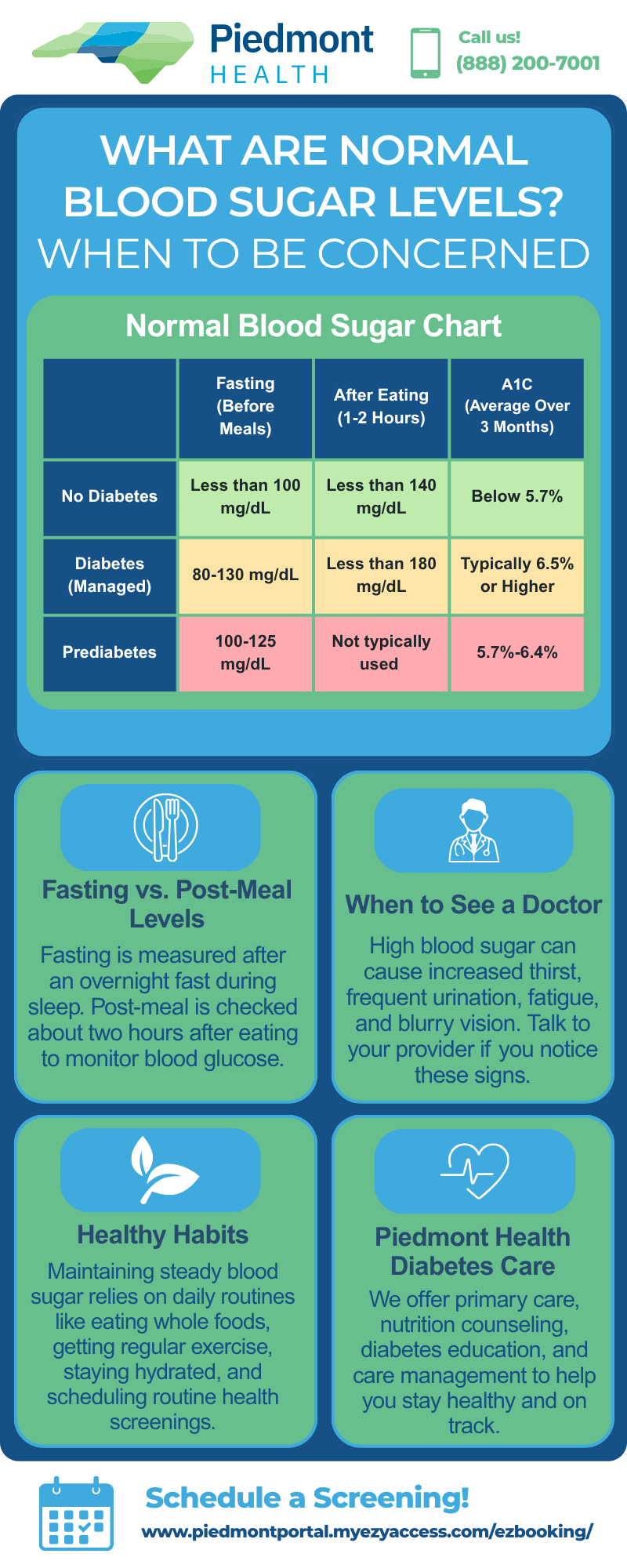
- For adults without diabetes, normal blood sugar is generally below 100 mg/dL before meals and below 140 mg/dL 1-2 hours after the start of a meal.
- For many adults with diabetes, typical blood sugar targets are 80 to 130 mg/dL before meals and below 180 mg/dL 1-2 hours after the start of a meal.
- A fasting blood sugar range of 100 to 125 mg/dL falls within the prediabetes range, presenting a critical opportunity to lower elevated levels through healthy lifestyle choices.
- Maintaining steady blood sugar relies on daily routines like eating whole foods and high-fiber vegetables, getting regular exercise, staying hydrated, and scheduling routine health screenings.
Maintaining healthy blood sugar levels plays a crucial role in overall long-term wellness. Glucose serves as the primary source of energy for the body, but improper regulation can lead to severe complications over time. Piedmont Health provides comprehensive primary care and supportive health services to help individuals manage their health and wellness.
Understanding Blood Sugar: Fasting vs. Post-Meal
Glucose values fluctuate throughout the day based on food intake, physical activity, and stress. Healthcare professionals use blood sugar measurements at different times to monitor glucose levels and help assess blood sugar control. Fasting blood sugar is measured after fasting overnight. Post-meal blood sugar can be checked two hours after the start of a meal to monitor blood glucose levels. Looking at blood sugar at different times of day, along with A1C when appropriate, can help healthcare professionals evaluate blood glucose control.
Normal Blood Sugar Ranges for Adults
Blood sugar ranges vary depending on if a person has diabetes or not. For adults without diabetes, standard targets include:
- Before meals: Less than 100 mg/dL
- 1-2 hours after the start of a meal: Less than 140 mg/dL
Target ranges shift slightly for individuals managing diagnosed diabetes:
- Before meals: 80 to 130 mg/dL
- Two hours after the start of a meal: Less than 180 mg/dL
When High Blood Sugar Becomes a Concern
Consistently elevated readings indicate that the body is struggling to regulate glucose efficiently. Chronic high glucose, known as hyperglycemia, damages blood vessels and organs if left unaddressed. Common indications of elevated levels include increased thirst, frequent urination, fatigue, and blurry vision. Recognizing these signs and addressing elevated blood sugar can help reduce the risk of long-term health complications.
Prediabetes: A Critical Window for Prevention
Prediabetes occurs when glucose numbers are higher than standard limits but not yet elevated enough for a diabetes diagnosis. A fasting blood sugar measurement between 100 and 125 mg/dL falls within the prediabetes range. At least two abnormal blood sugar test results are needed to make a diagnosis. Prediabetes can be reversed, and lifestyle changes can help lower blood sugar and prevent or delay progression to diabetes.
How to Manage Your Levels Naturally
Daily lifestyle decisions directly influence glucose stability. Simple, sustainable habits can help support healthy blood sugar levels and overall wellness:
- Prioritize whole foods, lean proteins, and high-fiber vegetables while limiting refined sugars.
- Engage in regular physical activity such as walking or swimming to help muscles process glucose.
- Stay well hydrated by drinking plenty of water and choosing water instead of sugary drinks.
- Utilize dedicated nutrition counseling to build balanced meal plans.
Schedule Your A1C Test at Piedmont Health
Routine screenings provide the clearest path toward preventing chronic health issues. Through care, nutrition counseling, diabetes education, and care management, our team supports patients in managing their health and blood sugar levels. Contact us today to schedule a checkup and discuss blood sugar testing and your long-term health. Featured Image: Me dia / Shutterstock